When "Urgent" Became the New Normal for Business Owners
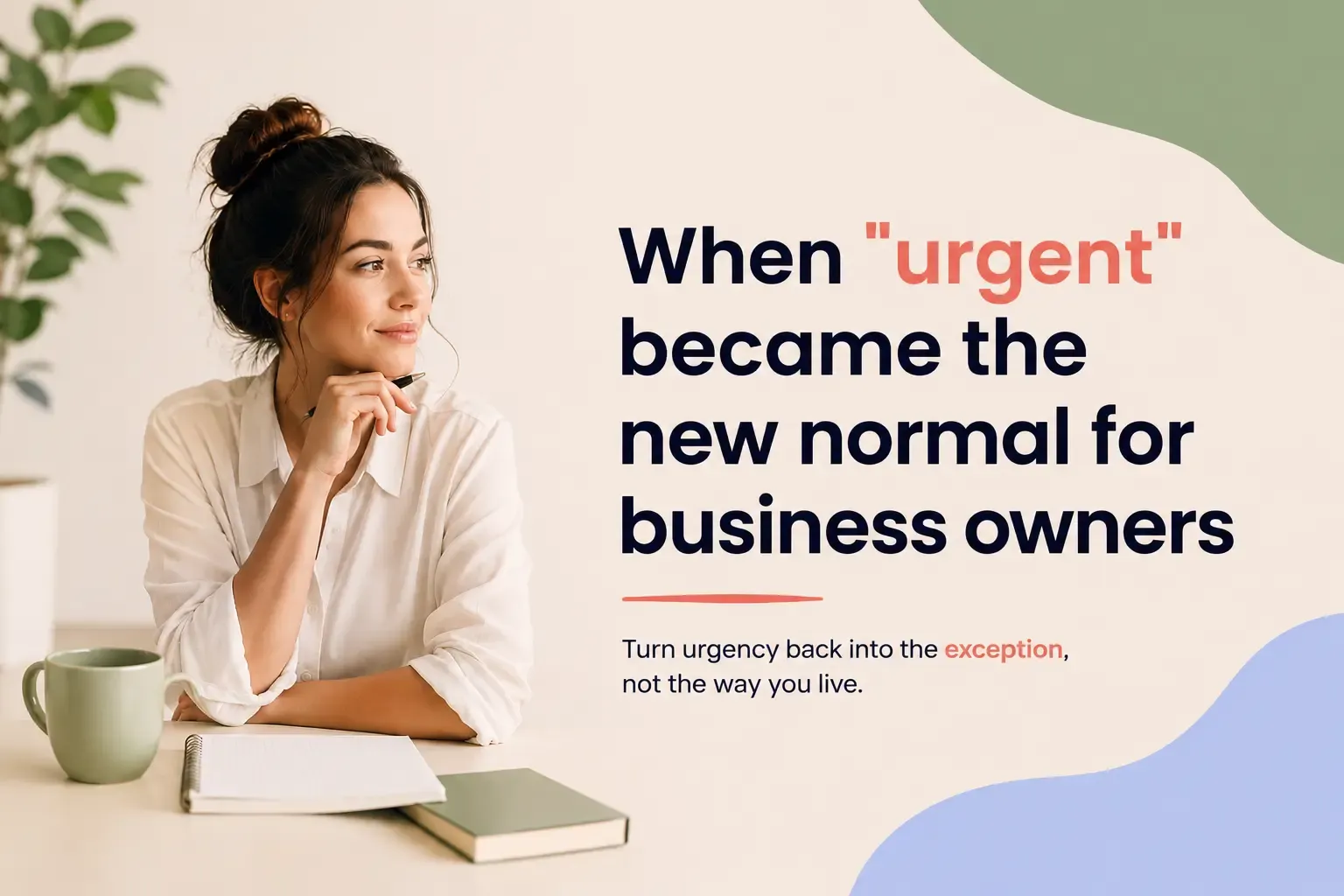

For years, she worked in a business environment where "urgent" was the rule rather than the exception. The relentless pace of constant urgency shaped decision-making, organization, and workplace relationships, all under the pressure of moving faster. Over time, this way of working drained energy, reduced focus, and disrupted the balance between professional and personal life.
It wasn't until she left that environment and completed GoThrive's Virtual Assistant Academy that she realized how transformative clear processes, effective prioritization, and strong organizational systems can be.
Today, as a virtual assistant supporting business owners, Ivana Kardum Pamučar helps entrepreneurs break free from the endless cycle of firefighting. Backed by a supportive community and modern digital tools, she works alongside her clients to build systems that create long-term stability—not only for their businesses, but also for the people who work with them.
The constant state of "urgency" reflects one of the biggest challenges of modern business, where continuous pressure and unpredictability often dictate the pace of work. For many entrepreneurs, the word "urgent" is no longer an occasional call to action—it has become a permanent feature of everyday business life. Last-minute deadlines, unexpected challenges, client requests, and constant interruptions create an environment where urgency is no longer the exception, but the norm.
Why Business Owners Are Constantly Working in "Urgent Mode"
- Market Unpredictability - Clients change their requirements at the last minute, competitors introduce unexpected moves, and opportunities can appear—and disappear—in an instant. This constant uncertainty makes it difficult to plan ahead and often forces business owners into reactive decision-making.
- Taking on Too Much - Many entrepreneurs are reluctant to turn down opportunities. As a result, they commit to more projects, meetings, and responsibilities than they can realistically manage, creating a workload where everything feels equally urgent.
- Lack of Systems and Processes - Without clear workflows and standardized procedures, tasks are handled on an ad hoc basis. Instead of following an organized process, every new request becomes an emergency, making urgency the default operating mode.
- A Culture of Firefighting - In many industries, working under constant pressure has become normalized. Solving problems at the last minute is often seen as a sign of dedication or efficiency, even though this reactive approach increases stress, reduces productivity, and limits long-term business growth.
Does It Really Have to Be This Way?
Even hospital emergency departments rely on triage because critical resources—such as doctors, nurses, and medical equipment—are limited. Patients are prioritized based on the severity of their condition, with life-threatening cases receiving immediate attention. The goal is simple: ensure that those with the greatest need receive care first.
In business, however, this mindset is often missing. Almost every task has the potential to influence revenue, growth, customer satisfaction, or competitive advantage. As a result, business owners may begin treating every request, email, meeting, or project as equally urgent.
Over time, this creates a culture where urgency spreads across every aspect of the business. Instead of distinguishing between what is truly critical and what can be planned or delegated, everything competes for immediate attention—especially in fast-moving markets where change is constant.
The challenge isn't that urgent situations exist—they always will. The challenge is learning to recognize which ones genuinely require immediate action and which ones only feel urgent.
What Would It Mean to Apply an ATS Approach to Business Task Triage?
The Australasian Triage Scale (ATS) is a prioritization framework originally developed for emergency healthcare, where patients are classified into five categories based on the urgency of their condition and the maximum recommended response time.
A similar approach can be applied to business operations by classifying tasks according to their business impact—including their effect on revenue, operational risk, key performance indicators (KPIs), and the use of critical resources. Instead of treating every task as equally urgent, business owners can assign priorities based on their potential consequences and define clear response timeframes for each category.
By introducing a structured triage system, organizations can focus their attention where it matters most, reduce unnecessary stress, and prevent every request from becoming an immediate priority.
Business ATS Categories
Category 1 (Red) – Immediate
A crisis that threatens the "survival" of the business, such as meeting a critical tax deadline, responding to a major cybersecurity incident, or correcting a significant error in financial reporting. Action should begin within minutes or hours.
Category 2 (Orange) – Very Urgent
A high-risk issue with the potential to escalate if left unresolved, such as a legal matter, a major client complaint, or a critical operational disruption. Initial assessment and response should take place within 10 to 30 minutes.
Category 3 (Yellow) – Urgent
Important tasks that may have a meaningful impact on the business, such as an urgent client request, a time-sensitive proposal, or a supplier issue. These should be assessed and acted upon within 30 to 60 minutes.
Category 4 (Green) – Less Urgent
Routine operational tasks with a moderate business impact, including scheduling meetings, reviewing documents, or coordinating internal activities. These should typically be completed within 1 to 2 hours.
Category 5 (Blue) – Can Be Deferred
Low-priority work that does not require immediate attention, such as administrative tasks, long-term research, process improvements, or non-urgent planning. These tasks can be scheduled for later or delegated to another team member.
The Consequences of Constant "Urgent Mode"
Constantly responding to urgent tasks can create the illusion of productivity, but over time it leads to emotional and physical exhaustion for both business owners and their teams. A continuous state of urgency triggers chronic stress, reduces focus, impairs decision-making, and increases the risk of burnout and other health-related issues.
When urgent tasks dominate the workday, strategic activities—such as planning, business development, innovation, and professional learning—are pushed aside. Leadership teams end up spending most of their time managing daily crises rather than improving systems, developing new opportunities, or strengthening the business for long-term growth.
This creates a vicious cycle of constant firefighting. Instead of proactively building a resilient organization, the business becomes trapped in a reactive mode where long-term stability and competitiveness suffer because there is little time or capacity to invest in meaningful improvements.
Delegation also requires balance. Simply assigning more work to team members without considering their capacity can shift the problem rather than solve it. To prevent overload, leaders should regularly monitor each person's workload, distribute responsibilities according to skills and available capacity, and review task allocation on a weekly or monthly basis. Effective delegation is not just about transferring tasks—it's about creating a sustainable workload that allows both people and the business to perform at their best.
Warning Signs That Constant Urgency May Lead to Employee Turnover
Several indicators suggest that a workplace driven by chronic urgency can eventually lead employees to disengage—or leave the organization altogether.
- Declining Motivation and Engagement - Employees begin doing only what is required, with little enthusiasm or initiative to go beyond their core responsibilities. This can be an early sign of quiet quitting, where individuals disengage emotionally long before they decide to resign.
- Withdrawal from the Team - Instead of collaborating and contributing to discussions, employees become increasingly isolated. Communication with colleagues decreases, participation in team activities drops, and they may distance themselves from the workplace culture.
- Increased Irritability and Emotional Exhaustion - Chronic stress often manifests through irritability, difficulty concentrating, poor sleep, digestive issues, and a weakened immune system. These symptoms can significantly affect both wellbeing and workplace performance.
- Reduced Productivity and Lower Confidence - Performance begins to decline, and employees may feel they are no longer effective in their roles. Constant interruptions and shifting priorities make it difficult to complete meaningful work, leading to frustration and reduced self-confidence.
- Signs of Burnout - Long-term exposure to constant pressure can result in burnout—a state of physical, emotional, and mental exhaustion. Common signs include persistent fatigue, decreased cognitive performance, anxiety, emotional detachment, and, in severe cases, thoughts of self-harm or suicide. Burnout is a serious occupational health issue that requires timely recognition and appropriate support.
Delegation without a clear system can turn certain team members into a repository for chaos, leaving them overwhelmed and constantly reacting to urgent demands. In contrast, well-structured delegation empowers the team to function as a true extension of the business owner, ensuring that responsibilities are distributed effectively, workflows remain consistent, and the business operates smoothly—even under pressure.
How to Break Free from the Cycle of Constant Urgency
- Set Clear Priorities and Plan Ahead - The key is learning to distinguish between what is urgent and what is important. A well-structured schedule and clearly defined priorities help reduce the constant feeling of urgency by enabling more intentional, proactive decision-making.
- Delegate Effectively - Business owners don't have to do everything themselves. Trusting team members and virtual assistants with operational responsibilities frees up valuable time to focus on strategic decisions and the challenges that truly require the owner's attention.
- Set Realistic Deadlines - When every task is expected to be completed immediately, maintaining that pace becomes unsustainable. Setting realistic deadlines creates healthier expectations, improves the quality of work, and helps establish a more balanced workflow.
- Automate Repetitive Work - Technology can significantly reduce the time spent on routine tasks. By implementing automation tools and efficient systems, businesses can minimize manual work, reduce interruptions, and prevent unnecessary "urgent" situations from arising.
- Manage Your Energy, Not Just Your Time - Sustainable performance depends on more than good time management. Regular breaks, adequate rest, and intentional recovery activities help maintain focus, improve decision-making, and reduce the long-term impact of stress.
Business owners who successfully move beyond a constant state of urgency are not only calmer—they are often more successful. Those who learn to balance immediate demands with long-term planning are far better positioned to build resilient, innovative, and sustainable businesses.
Effective delegation is built on trust. By assigning operational and routine responsibilities to team members or external professionals such as virtual assistants, business owners can shift many tasks from the "urgent" category into the "important, but not immediate" category. Administrative work, routine customer inquiries, scheduling, and other recurring tasks can often be handled just as effectively by someone else, allowing leaders to focus on high-value strategic priorities.
Automation and modern technology provide another powerful advantage. Platforms such as monday.com and AI-powered tools can help categorize work based on urgency and business impact, making it easier to prioritize what truly requires immediate attention. Integrating these systems with calendars, workflows, and automated scheduling further reduces unnecessary interruptions, streamlines operations, and creates more time for creative thinking, innovation, and long-term business growth.
Conclusion
Once you've established clear priorities, built reliable processes, and delegated responsibilities effectively, give yourself permission to embrace a little niksen—the Dutch practice of intentionally doing nothing.
Niksen is the conscious decision to step away from goals, tasks, and the constant pressure to be productive. It means allowing your mind to wander, slowing down, and simply being present without feeling the need to accomplish something.
In a business culture where constant urgency is often celebrated, moments of intentional pause are not a luxury—they are a competitive advantage. They help restore mental clarity, improve decision-making, spark creativity, and support long-term resilience.
The goal isn't to eliminate urgency altogether. Every business will face situations that require immediate action. The goal is to ensure that urgency becomes the exception rather than the default operating mode. When leaders build effective systems, delegate with confidence, and make space for recovery, they create businesses that are not only more productive, but also more sustainable—for themselves, their teams, and their future growth.
What Does Niksen Encourage?
- Simply Sit and Observe - Look out of the window without a purpose. Let your attention drift instead of focusing on a task or outcome.
- Unplug from Your Devices - Put your phone away, step back from your screens, and allow yourself a few moments of uninterrupted silence.
- Rest Without Guilt - Lie down on the couch, sit comfortably, or enjoy a quiet moment without feeling the need to be productive. Rest is valuable in its own right.
- Let Go of Goals - Avoid planning, problem-solving, or analyzing. Give your mind the freedom to wander naturally, without directing it toward a specific objective.
- Take Micro-Breaks - Even a few minutes of niksen throughout the day can help reduce stress, restore focus, and improve your overall wellbeing.
Urgency will always be part of running a business—but it should never define how a business owner works every day. Understanding your own limits, managing your energy, and being intentional about productivity lead to better decisions, stronger leadership, and a healthier balance between business and personal life.
Ivana Kardum Pamučar is a virtual assistant specializing in project support, including desk research and statistical analysis for the preparation and development of strategic documents. She helps business owners confidently manage EU-funded projects while providing ongoing operational and administrative support, allowing them to focus on growing and developing their businesses.
For more information or to get in touch, contact info@tillerva.hr