Čovjek, a ne bot: Zašto je virtualni asistent najpametnija investicija u 2026.?
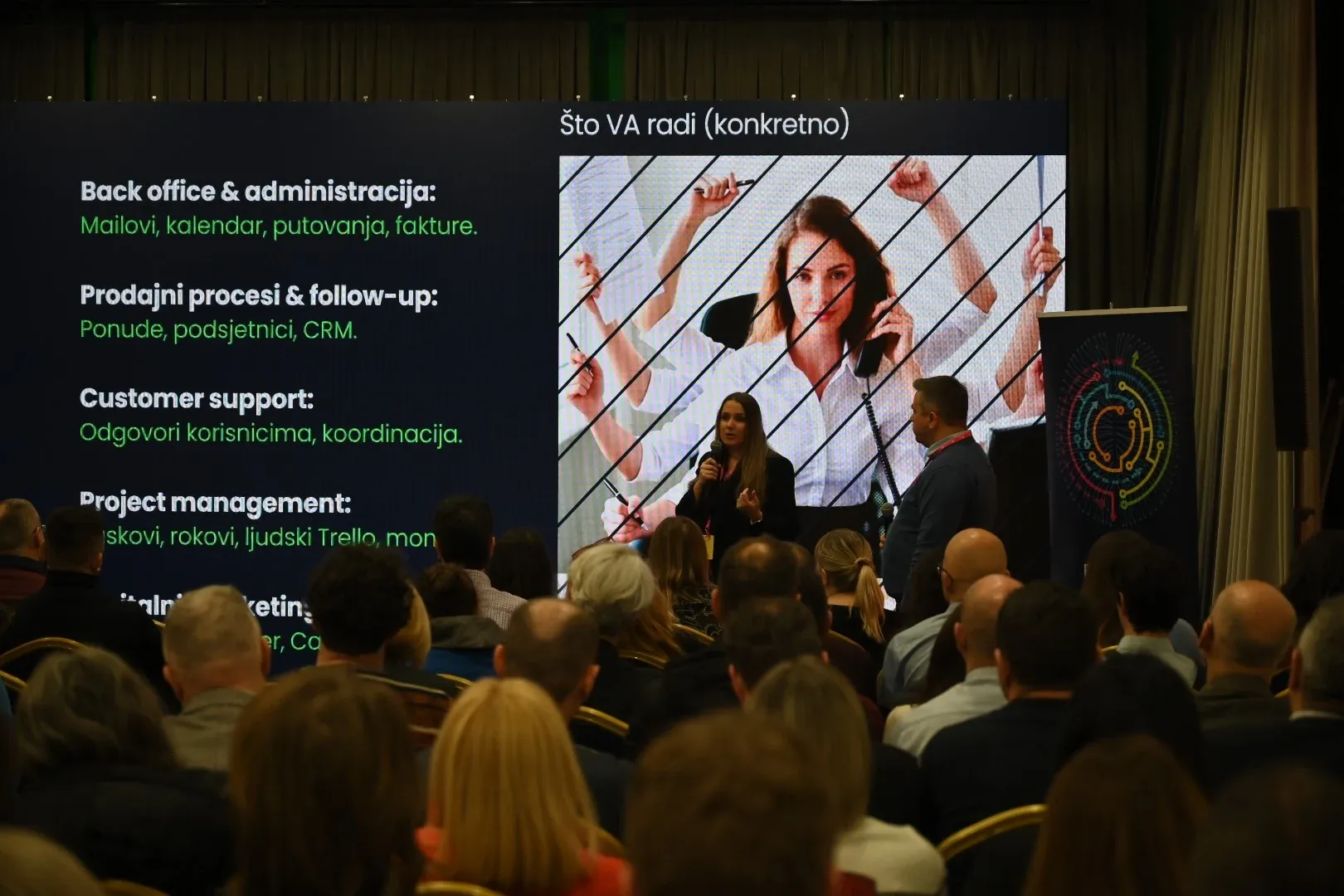

U četvrtak, 5. veljače 2026., na Bug Future Showu 2026. u zagrebačkom Mozaik Event Centru, pred prepunom dvoranom Muller, Katarina Zubatović i Nikola Mujdžić Reščić održali su predavanje koje je publiku istovremeno nasmijalo i “pogodilo” ravno u realnost poduzetništva:
“Čovjek, a ne bot! Zašto je virtualni asistent najpametnija investicija u 2026.?”
Bug Future Show i ove je godine okupio brojne posjetitelje, program se odvijao na tri pozornice, a teme su se kretale od održivosti i robotike do programiranja i umjetne inteligencije. U toj atmosferi tech hypea i brzih obećanja, Katarina i Nikola napravili su nešto osvježavajuće: pričali su o onome što se ne da automatizirati do kraja - kontekst, ljudi, odgovornost i operativni kaos koji svakodnevno “jede” fokus.
“Ja sam Katarina, ovo je Nikola… i čovjek koji je 2023. skoro dobio živčani slom.”
Otvaranje je krenulo jednostavno, kao priča s kojom se svatko u dvorani može povezati. Katarina se predstavila i odmah postavila ton:
“Dobro jutro svima! Ja sam Katarina, ovo je Nikola - moj partner… i čovjek koji je 2023. skoro dobio živčani slom od jednog ‘sitnog’ projekta.”
Nikola je ubacio šalu: “Samo jednog?”, a Katarina “mrtva hladna” priznala da su bila tri projekta u isto vrijeme. To je bio savršen uvod u njihovu glavnu tezu: virtualni asistent nije trend nego odgovor na realan problem modernog poslovanja.
U tom razdoblju Katarina je upravo pitchala Tonija Miluna za ideju tečaja za virtualne asistente jer je vidjela smjer tržišta i činjenicu da u Hrvatskoj nedostaje kvalitetan program. Nikola je u isto vrijeme držao na leđima Tonijeve konferencije, Burger festival (društvene mreže) i kinesku delegaciju koja snima na zaštićenim lokacijama, a usput su trebali snimiti i montirati tečaj.
I tad dolazi rečenica koju poduzetnici izgovaraju češće nego što vole priznati:
“Ne znam kako ću sve to.”
Katarina je tu napravila pauzu i okrenula se prema publici:
“Tko se prepoznao?”
Ruke su se dizale, smijeh je krenuo, jer su svi znali o čemu priča.
Hvar u 60 minuta: primjer koji objašnjava razliku između “AI će sve” i “netko mora to stvarno riješiti”
Katarina je odlučila pomoći i preuzeti “kineski projekt”. U praksi to nije bila jedna Excel tablica, nego oko 70 dopisa raznim institucijama jer za svaku lokaciju treba dozvola, a nekad i nekoliko. A dodatni “twist”? Delegacija u startu nije ni znala gdje sve želi snimati.
Deset dana kasnije, dozvole su bile riješene. A onda preokret. Kineska delegacija putuje brodicom prema jednom otoku i usred vožnje se predomisle: “Idemo ipak na Hvar.”
Nikola sažima situaciju: imaju sat i nešto da dobiju dozvolu za lokaciju koja uopće nije bila na popisu. Katarina zove nadležni ured. Odgovor:
“Gospođo, to je nemoguće. Inače se čeka 8 do 14 dana. I danas u 12 dolazi predsjednik, mi ga moramo dočekati.”
Publika se smijala jer je prepoznala birokratsku stvarnost. A Katarina nastavlja: moljakanje, objašnjavanje, “ovo je važno za turizam”, “popularna kineska TV emisija”… i na kraju dobivaju - usmenu dozvolu.
A onda je uslijedio punchline koji se pamti:
“Ako vas policija zaustavi, zovite mene direktno.” Jer Hvar je pun policije zbog predsjednika, a Katarina je doslovno imala broj osobe koja rješava problem na licu mjesta.
To je bio trenutak u kojem je svima postalo jasno: ovo nije ‘task’. Ovo je stvarni život.
“Kira, možeš li dobiti usmenu dozvolu na Hvar u 60 minuta?”
Nikola je potom ubacio tech-kontrast koji je sjeo savršeno: spominje Lenovo i ideju AI asistenta koji “sluša što radiš, vidi što vidiš i izvršava zadatke”.
I onda pitanje koje je publika dočekala spremno:
“Kira, možeš li dobiti usmenu dozvolu za Hvar u roku 60 minuta dok delegacija plovi brodom i predsjednik stiže u 12?”
Katarina zaključuje:
“Mislim da bi se Kira resetirala na tvorničke postavke.”
Virtualni asistent nije chatbot - nego osoba koja pretvara kaos u sustav
Tu su najjasnije povukli crtu:
- Chatbot je odličan za FAQ, nacrte, jednostavne automatizacije.
- Virtualni asistent pobjeđuje kad treba prosudba i kontekst, komunikacija s ljudima i najvažnije - odgovornost.
Nikola je to rekao kratko, ali brutalno istinito:
“AI može ubrzati. Ali ne može preuzeti ownership.”
VA može i uz to zna prepoznati kad AI halucinira.
Katarina je dala i “dokaz iz prakse” s AI alatom: htjela je da Canva AI samo napravi resize fotke njihove virtualne asistentice… i Canva ju je pretvorila u mačku. Nikola se nadovezao:
“Ako vam AI ikad kaže ‘siguran sam’ - nemojte mu slijepo vjerovati.”
I baš zato, njihova poruka za 2026. je jasna: VA postaje još vrijedniji jer netko mora znati koji AI alat ima smisla za vaš biznis, kako ga postaviti, testirati i gdje ga ne koristiti.
“Mit: Ako ga ne vidim, ne radi.” - i kako su to riješili bez mikromenadžmenta
Dotaknuli su i najčešći prigovor: “Ako ga ne vidim, ne radi.” Katarina je to razbila jednostavno: ni zaposlenika u uredu ne gledate u ekran 8 sati dnevno.
Njihovo rješenje je sistemsko: tracking vremena, popis zadataka i transparentnost. Klijent vidi što je napravljeno, koliko je trajalo i koji je output. To donosi ono što većina poduzetnika zapravo želi: kontrolu bez mikromenadžmenta i miran san.
Nikola je dodao i pragmatičan dio: zaposlenik znači poreze, opremu, bolovanja i rizik; VA znači fleksibilnost i plaćanje samo odrađenog.
Publika je vidjela da “VA” nije buzzword, nego stvarni ljudi.
Za kraj su dali zaključne poruke i jasan CTA: demo, primjeri i način kako spajaju poduzetnike s provjerenim asistentom. A u publici su bili i virtualni asistenti GoThive platforme. Kada ih je Katarina pozvala da ustanu, dvorana je vidjela da “VA” nije buzzword - nego stvarni ljudi.